Tamales with Masa: 9 Best Tips for Soft, Authentic Mexican Tamales
Mexican cuisine is full of delicious traditional dishes, and tamales are among the most loved. Made with corn-based dough, flavorful fillings, and corn husks, tamales are a comforting food enjoyed during family gatherings, holidays, and everyday meals. Learning how to prepare tamales with masa at home can help you enjoy their authentic flavor and soft, satisfying texture.
The secret to delicious tamales is preparing the masa correctly. The dough should be moist, tender, and easy to spread over corn husks without becoming too wet or crumbly. With the right ingredients and a few simple techniques, you can make homemade tamales that taste wonderful.
In this guide, you will learn about traditional masa, essential ingredients, preparation methods, cooking tips, and common mistakes to avoid.
What Are Tamales with Masa?
Tamales are a traditional Mexican dish made by spreading seasoned corn dough over soaked corn husks or, in some regions, banana leaves. The dough is filled with ingredients such as chicken, pork, cheese, beans, or vegetables before being folded and steamed.
The word masa refers to dough, commonly made from corn that has undergone nixtamalization, a process in which corn is treated with an alkaline solution. This traditional process changes the corn’s texture and makes it suitable for preparing masa.
When preparing tamales with masa, the dough plays an important role in the final result. Good masa should hold its shape while remaining soft and tender after steaming.
Tamales vary across Mexico. Some contain spicy red or green salsa, while others feature sweet fillings such as cinnamon, sugar, or raisins. This variety makes tamales a versatile dish that can be adapted to different tastes.

Essential Tamale Ingredients for Homemade Tamales
Before starting your Mexican tamales masa recipe, gather the ingredients. The exact quantities may vary depending on the type of masa you use, but the following ingredients are a useful starting point.
Ingredients for the Masa Dough
For approximately 12–15 medium tamales, you will need:
- 4 cups masa harina for tamales
- 3–4 cups warm chicken or vegetable broth, added gradually
- 1 cup lard or vegetable shortening
- 1 teaspoon baking powder
- 1 teaspoon salt, or according to taste
- 12–15 dried corn husks
You may need slightly more or less broth depending on the brand of masa harina and the texture you want.

Ingredients for the Filling
Choose one filling or prepare a mixture of your favorites:
- 2 cups cooked, shredded chicken
- 1 cup salsa verde or salsa roja
- 1–2 cups cooked, seasoned pork
- Shredded cheese and green chilies
- Cooked beans or seasoned vegetables
For a vegetarian version, use vegetable broth and a filling made with beans, cheese, peppers, or vegetables. If you want a traditional flavor, season your filling with ingredients such as cumin, garlic, onion, and dried chilies.
Helpful tip: Prepare the filling before assembling your tamales. This makes the process easier and helps you work efficiently.
Mexican Tamales Masa Recipe: Preparing the Dough
A good Mexican tamales masa recipe begins with the right balance of corn flour, fat, liquid, and seasoning. Each ingredient contributes to the dough’s texture and flavor.
Masa harina is a convenient option for home cooks because it is dried corn flour made from nixtamalized corn. When combined with liquid, it forms dough suitable for tamales.
Start by placing the masa harina, baking powder, and salt in a large mixing bowl. Stir them together so the ingredients are evenly distributed.
In another bowl, beat the lard or vegetable shortening until it becomes lighter and smoother. Gradually mix in the dry ingredients, adding warm broth a little at a time.
Continue mixing until the dough becomes soft and spreadable. Avoid pouring in all the liquid at once because different brands absorb moisture differently.
The finished dough should not be dry, stiff, or runny. It should spread easily over a corn husk and hold its shape without cracking.

How to Make Masa for Tamales Step by Step
If you are wondering how to make masa for tamales, follow these simple steps.
Step 1: Soak the Corn Husks
Place dried corn husks in a large bowl or pot of warm water. Let them soak for approximately 30–60 minutes, or until they become flexible.
Keep them submerged with a plate if necessary. Once softened, rinse away any debris and drain the husks.
Step 2: Mix the Dry Ingredients
Combine the masa harina, baking powder, and salt in a large bowl. Mix well to distribute the seasonings evenly.
Step 3: Prepare the Fat
Beat the lard or vegetable shortening until smooth and slightly fluffy. This step helps create a lighter texture, although the final result also depends on the moisture balance and steaming process.
Step 4: Add the Masa Harina
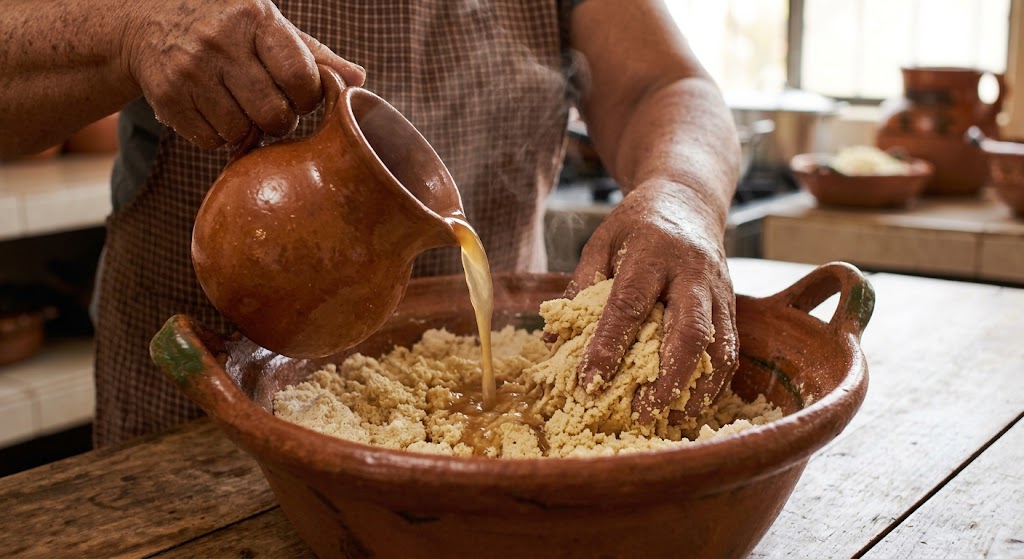
Gradually mix the masa harina into the fat. Pour in warm broth in small amounts while mixing.
Keep checking the consistency. If the dough looks dry or develops cracks when spread, add a little more broth.
Step 5: Check the Dough Texture
Take a small portion and spread it over a softened corn husk. The dough should move smoothly across the surface without crumbling.
If it feels too stiff, add a small amount of broth. If it is excessively wet, mix in a little more masa harina.
Step 6: Rest the Masa Briefly
Allow the prepared dough to rest for around 5–10 minutes. This gives the masa harina time to absorb the liquid.
Check the texture again before assembling your tamales. Add a little broth if the dough has become too firm.
What Is Tamale Dough Masa?
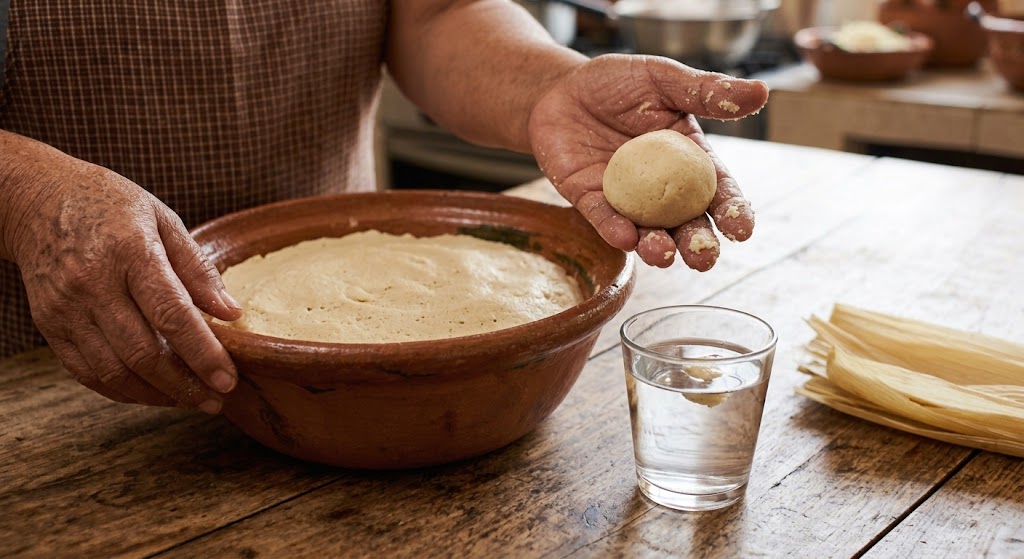
Tamale dough masa is the prepared mixture used to make the outer layer of tamales. It typically combines masa harina or fresh masa with liquid, fat, and seasonings.
Understanding the difference between masa harina and prepared dough is important.
Masa harina is dried corn flour that needs liquid before it becomes dough.
Masa is the dough itself. Depending on the recipe, it can be made from fresh masa or reconstituted masa harina.
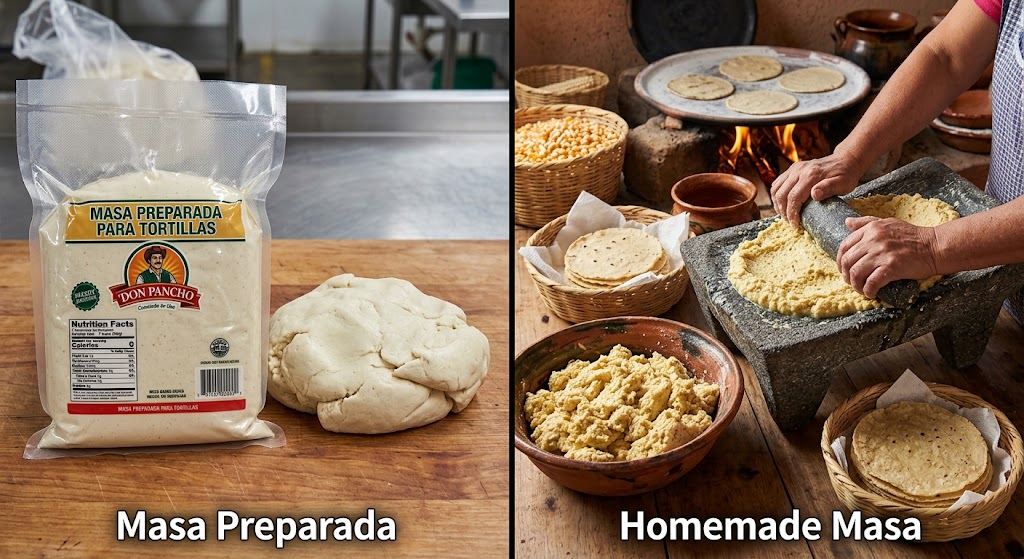
Masa preparada refers to prepared masa dough that may already contain ingredients such as fat, broth, or seasonings. The exact preparation depends on the seller and recipe.
The ideal tamale dough should be soft and moist enough to spread. A crumbly mixture may need additional liquid, while a dough that is too wet may require a small amount of masa harina.
Do not rely on one texture test alone. The dough’s moisture, the quality of the ingredients, and the steaming process all affect the finished tamales.
Masa Preparada vs. Homemade Masa
Masa preparada is a convenient choice for people who want to make tamales without mixing every ingredient from scratch.
Depending on the store or market, prepared masa may already contain fat, broth, salt, or other ingredients. Always ask what has been added before adjusting the recipe.
Homemade masa gives you greater control over the flavor, moisture, and fat content. You can also adapt it to dietary preferences by choosing suitable ingredients.
Here is a simple comparison:
| Feature | Masa Preparada | Homemade Masa |
| Convenience | Usually quicker | Requires more preparation |
| Ingredient control | Depends on the seller | You choose the ingredients |
| Seasoning | May already be seasoned | Easy to customize |
| Texture | Varies by preparation | Adjustable to your preference |
| Best for | Convenient cooking | Personalized recipes |
If you buy prepared masa, check its consistency before adding more broth or fat. Adding ingredients without checking first may make the dough too wet or greasy.
Masa Harina Tamale Recipe: Choosing the Right Corn Flour
A successful masa harina tamale recipe starts with the correct flour.
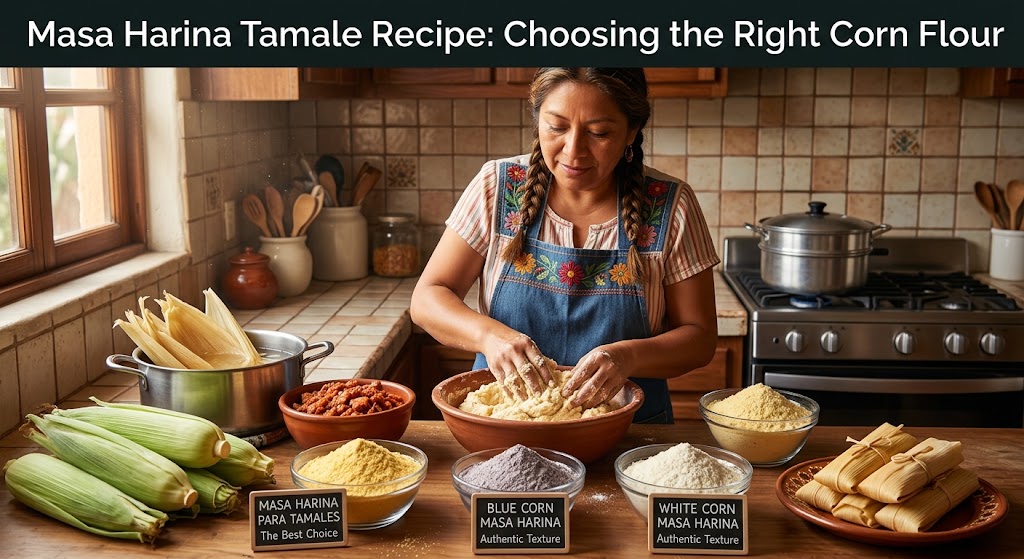
Masa harina is made from nixtamalized corn that has been dried and ground into flour. It is different from ordinary cornmeal, which generally does not undergo the same preparation process.
Regular cornmeal is not a direct substitute for masa harina in a traditional tamale recipe because it can produce a different texture and flavor.
When shopping, look for masa harina labeled for tamales if available. Some products are ground or formulated differently for particular uses, so follow the package instructions.
You can also use fresh masa purchased from a Mexican grocery store or tortillería. Fresh masa may require different quantities of liquid and fat than dried masa harina.
The important thing is to adjust your recipe to the product you have rather than assuming every corn flour absorbs moisture in the same way.
How to Make Masa Harina for Tamales
The phrase “how to make masa harina for tamales” can refer to two different processes.
Making masa harina itself involves preparing corn through nixtamalization, washing and grinding it, and drying the resulting material into flour. This is a separate process from preparing tamale dough and can be more involved at home.
For a practical homemade recipe, most cooks purchase ready-made masa harina and turn it into dough.
To prepare the dough:
- Measure the masa harina into a mixing bowl.
- Add salt and baking powder if your recipe uses them.
- Beat the lard or vegetable shortening separately.
- Mix in the masa harina gradually.
- Add warm broth until the dough becomes soft and spreadable.
- Let it rest briefly and check its consistency again.
This approach makes it easier to prepare tamales without going through the entire corn-processing process.
Corn Masa for Tamales: Tips for the Best Texture
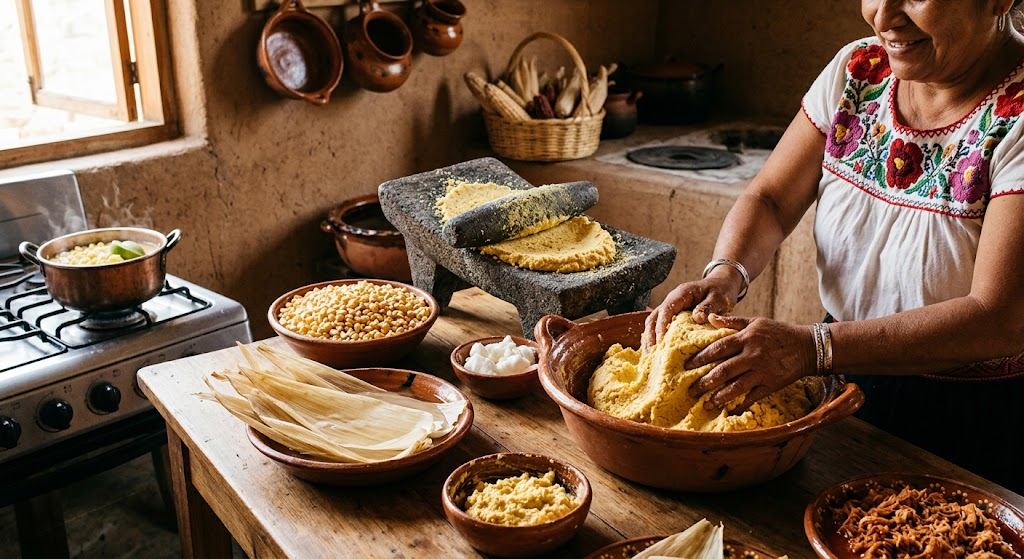
Corn masa for tamales should be soft enough to spread but firm enough to stay on the husk.
These practical tips can help you improve the texture.
1. Add liquid gradually. Different brands of masa harina absorb different amounts of broth. Small additions make it easier to control moisture.
2. Mix thoroughly. Even mixing distributes the fat, liquid, and seasonings throughout the dough.
3. Avoid overly dry masa. Dry dough may crack when spread and can produce dense tamales.
4. Do not make the dough runny. Excess liquid can make the masa difficult to spread and may affect its structure.
5. Follow your product’s instructions. Some masa harina products are specifically designed for tamales and may have different preparation recommendations.
6. Taste and adjust the seasoning. A little salt can make a noticeable difference in the final flavor.
The best results come from checking the dough’s consistency rather than relying only on fixed measurements.
How to Assemble and Cook Tamales with Masa
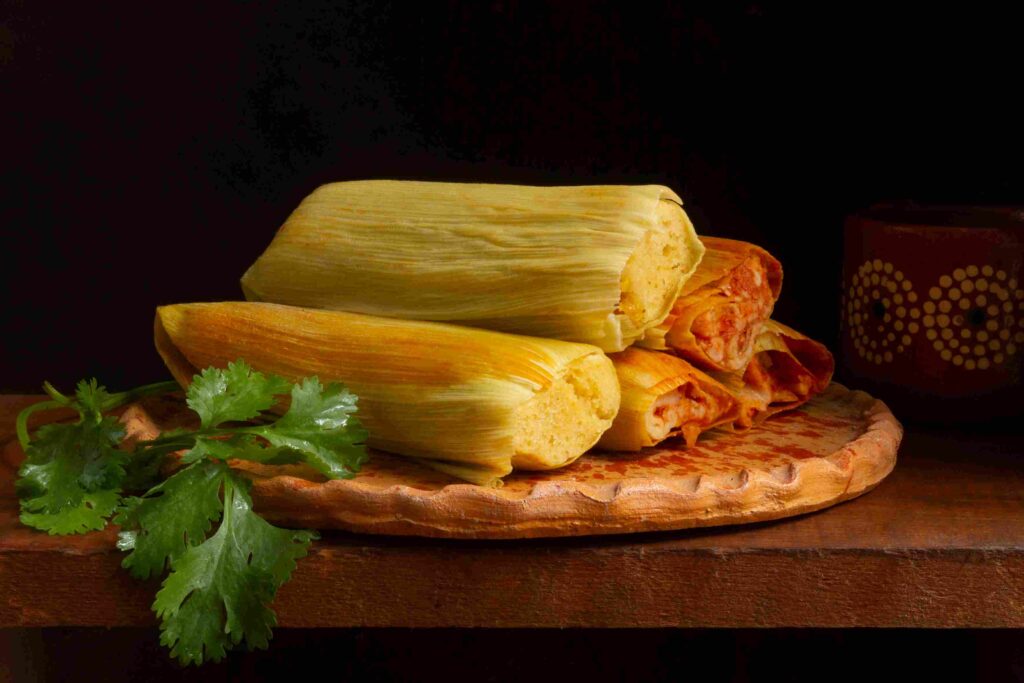
Once the dough and filling are ready, you can assemble the tamales.
Step 1: Spread the Masa
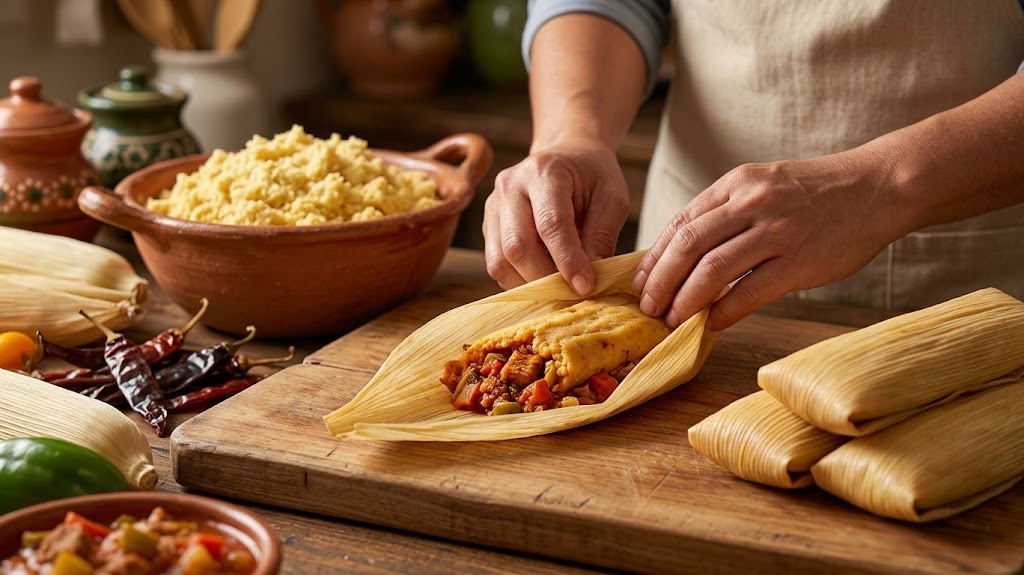
Lay a softened corn husk on a clean surface, with the wider end facing you. Spread a thin, even layer of masa over the wider section, leaving some space around the edges.
Avoid spreading the dough too thickly because it may take longer to cook.
Step 2: Add the Filling
Place a small amount of prepared chicken, pork, cheese, beans, or vegetables in the center of the masa.
Do not overfill the tamales. Too much filling can make folding difficult and cause the contents to spill out.
Step 3: Fold the Husks
Fold one side of the corn husk toward the center, then fold the other side over it. Fold the narrow bottom end upward if appropriate for your husk size and preferred method.
The tamale should be securely wrapped without squeezing out the filling.
Step 4: Prepare the Steamer
Add water to a steamer pot, keeping the water level below the steamer rack. Arrange the tamales upright with their open ends facing upward.
Cover the pot with a lid. Check the water level during cooking and add more hot water when necessary, taking care not to let the pot boil dry.
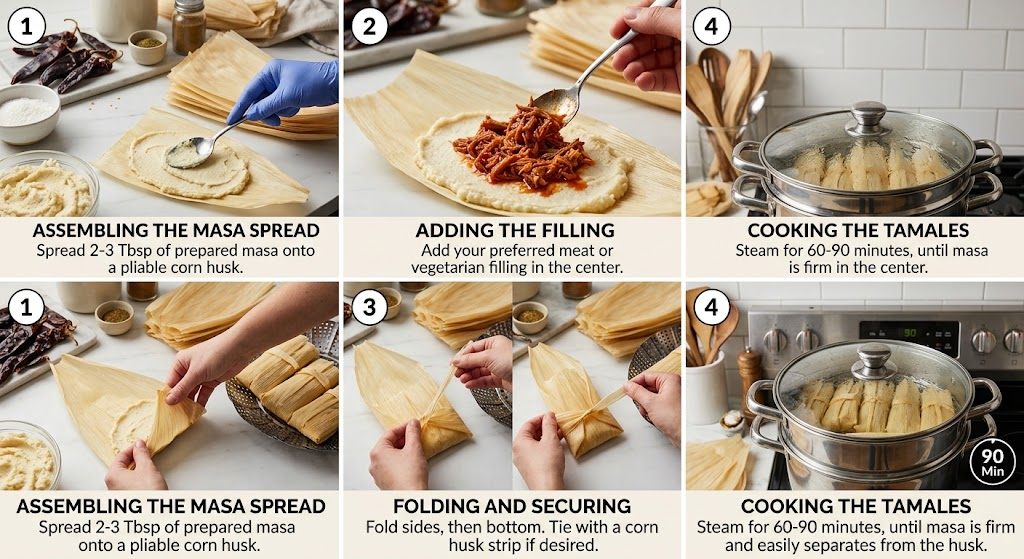
Step 5: Steam Until Cooked
Steam the tamales for approximately 60–90 minutes, depending on their size, the dough, and the steamer.
Check one tamale to see whether the masa has set and separates reasonably easily from the husk. If the dough remains wet or sticks heavily, continue steaming and check again.
Allow the cooked tamales to rest for about 5–10 minutes before serving. This helps the masa settle and makes them easier to handle.
9 Best Tips for Soft and Delicious Tamales
Use these tips to make your homemade tamales more consistent.
- Choose the right masa harina: Use a product intended for making masa rather than ordinary cornmeal.
- Measure carefully: Start with the recipe’s recommended quantities.
- Add broth slowly: Control the moisture as you mix.
- Beat the dough well: Thorough mixing helps distribute the fat evenly.
- Keep the masa spreadable: Adjust the liquid if the dough cracks.
- Use a moderate layer: Spread the dough evenly over each husk.
- Avoid excess filling: A smaller amount is easier to wrap securely.
- Maintain steam: Check the pot periodically to ensure it has enough water.
- Allow the tamales to rest: A short resting period improves handling and helps the texture settle.
Remember that tamale recipes vary by region and family tradition. You may need to make small adjustments based on the ingredients you use.
Common Mistakes to Avoid When Making Tamales
Even a straightforward recipe can be frustrating if the dough does not turn out as expected.
Using ordinary cornmeal: Cornmeal is not the same as masa harina and may produce a different result.
Adding too much liquid: Very wet dough can be difficult to spread. Add broth gradually and check the texture frequently.
Using dry masa: If the dough cracks when you spread it, it may need more liquid.
Overfilling the husks: Excess filling makes tamales harder to fold and may cause them to open during steaming.
Cooking with too little water: The steamer must maintain enough water to produce steam throughout the cooking process.
Serving immediately without resting: Letting tamales rest briefly after cooking makes them easier to handle and allows the masa to settle.
With practice, you will learn how the dough should feel and how to adjust the recipe to suit your preferred texture.
What to Serve with Mexican Tamales
Tamales are satisfying on their own, but traditional sides and sauces can make the meal even more enjoyable.
- Salsa roja: A red salsa made with tomatoes and chilies adds a rich, spicy flavor.
- Salsa verde: Green salsa offers a fresh, tangy contrast.
- Mexican rice: A flavorful rice side pairs well with savory tamales.
- Refried beans: Beans add a creamy texture and make the meal more filling.
- Guacamole: Avocado, lime, onion, and cilantro provide a fresh accompaniment.
Choose sides that complement your filling. For example, chicken tamales with salsa verde pair nicely with rice and beans, while cheese-filled tamales can be served with fresh salsa.
Frequently Asked Questions
1. What is the best masa for tamales?
Both fresh masa and masa harina can work well. Choose fresh masa from a reliable source or masa harina intended for tamales, then follow the preparation instructions for that product.
2. Can I use masa harina to make tamales?
Yes. Combine masa harina with the appropriate amount of broth, fat, and seasonings to prepare dough. Adjust the liquid gradually to achieve a soft, spreadable texture.
3. What ingredients are needed for tamale masa?
Common ingredients include masa harina or fresh masa, broth or water, lard or vegetable shortening, and salt. Some recipes also use baking powder.
4. How do I know when tamale masa is ready?
The dough should be moist, smooth, and easy to spread without being runny. It should not crack excessively when applied to a softened corn husk.
5. What is the difference between masa preparada and masa harina?
Masa harina is dried corn flour that must be mixed with liquid. Masa preparada is dough that has already been prepared and may contain fat, broth, and seasonings.
6. Why is my tamale masa dry?
Dry masa may result from insufficient liquid, differences between flour brands, or inadequate resting time. Add a little warm broth and mix again until the dough becomes spreadable.
7. How long should I steam tamales?
Many homemade tamales take approximately 60–90 minutes to steam. Cooking time varies according to size and dough consistency, so check that the masa is fully cooked before serving.
Conclusion
Making delicious tamales at home starts with understanding your masa and preparing it to the right consistency. The combination of corn dough, flavorful fillings, and gentle steaming creates a traditional Mexican dish that is perfect for family meals and special occasions.
When preparing tamales with masa, remember to add broth gradually, spread the dough evenly, avoid overfilling the husks, and allow enough time for steaming. Whether you use fresh masa, masa preparada, or masa harina, paying attention to the texture will help you achieve better results.
With these simple techniques and a little practice, you can prepare homemade tamales that are tender, flavorful, and enjoyable to share.